
Essay originally written for ASU FMS 360: Topic: Horror Films.
“In a child’s eyes, a mother is a goddess. She can be glorious or terrible, benevolent or filled with wrath, but she commands love either way. I am convinced that this is the greatest power in the universe.” (Jemisin, 61). This universal power undoubtably applies to many of the horror rules that are a recognized part of the film genre. The scared bond between a mother and her son has been highlighted and refracted throughout countless cinematic classics that are a staple of horror film history. It is a powerful plot device that allows a filmmaker to develop a wide range of narrative topics, and a chance to explore the intricate emotions that arise from them. Two themes often explored are the rampant state of violence towards women, and the complex family relationships that may transpire that terror.
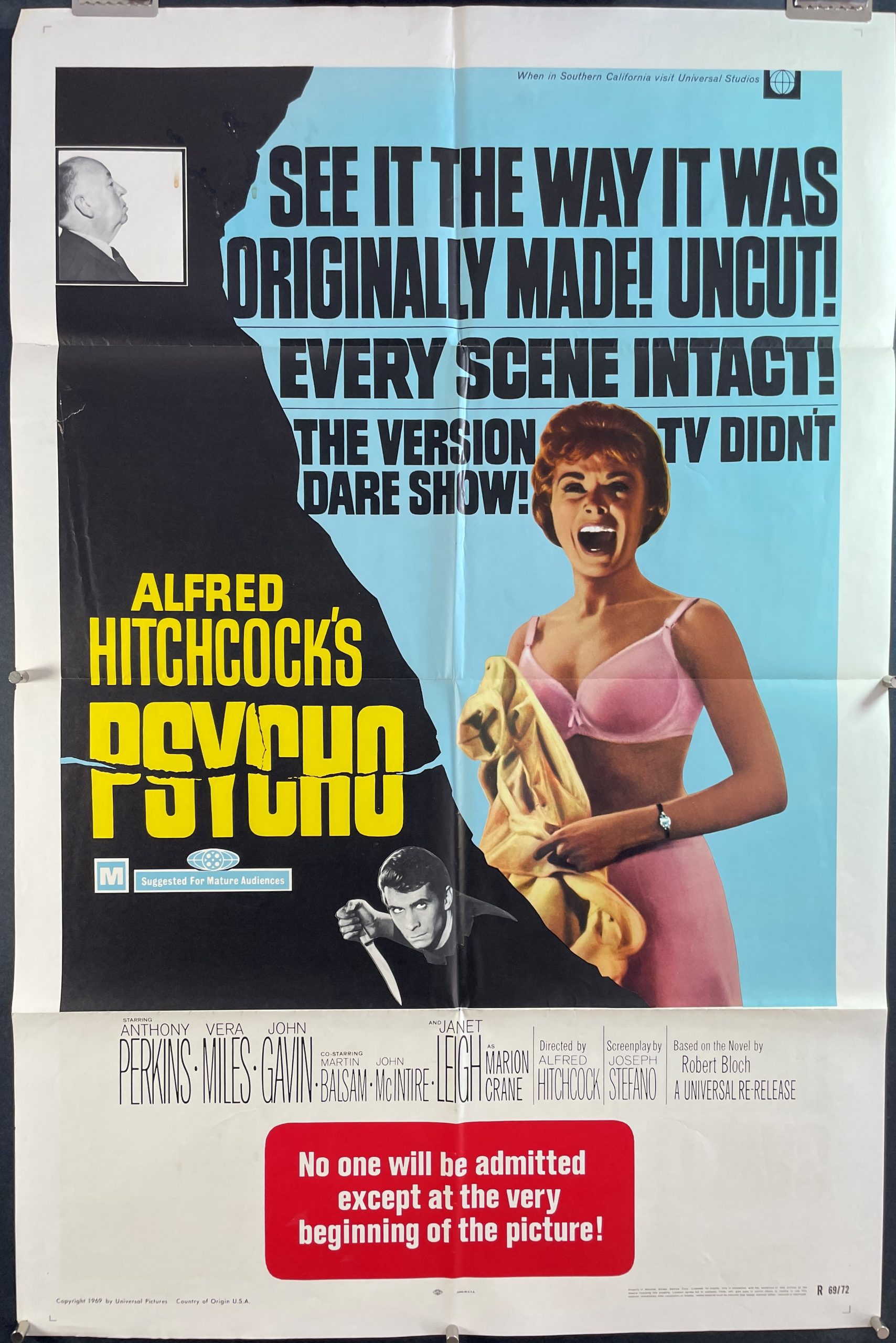
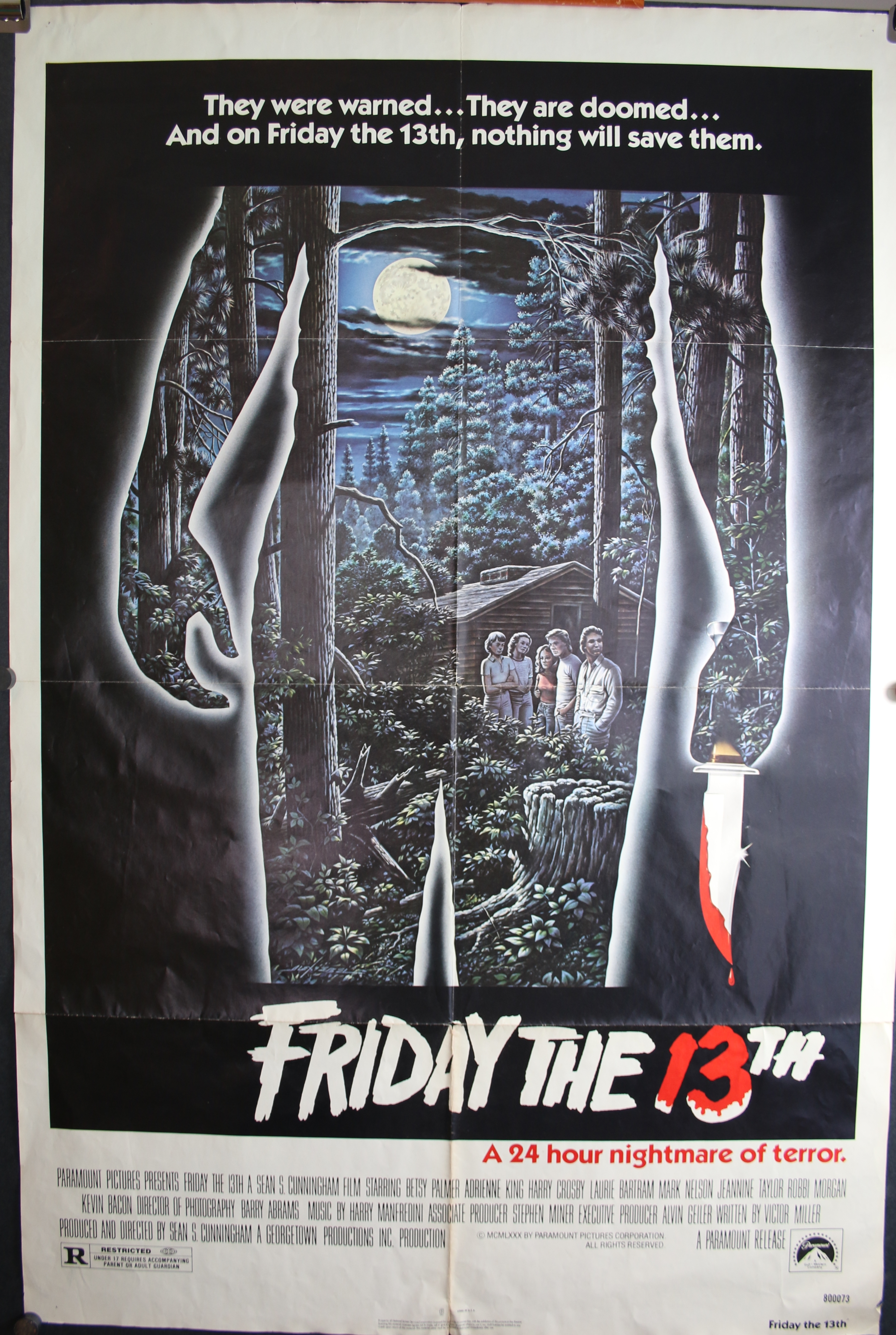
Two classic horror films that utilize these different horror tropes are Friday the 13th (1980) and Psycho (1960). Each of these films offer a unique interpretation for the root cause of violence and terror for these cinematic universes. Within the first few moments of Friday the 13th (1980) two teenage lovers attempting to be intimate together are brutally stabbed to death in their secluded location at Camp Crystal Lake. The murderer is reveled to be Pamela Vorhees, and her motive was revenge. Pamela was a former employee of the camp kitchen and tragically suffered the loss of her son Jason due to the neglect of the camp counselors who were charged with babysitting him.
Throughout the film Pamela serially murdered each new camp counselor hired by camp and property owner, Steve Christy. “Representations of the serial killer offer up one potent cultural site where concepts of evil can be articulated and narrativised.” (Norden, 71). Pamela is an evil character, but the audience is forced to feel empathy for the murderer and her origin story. Her actions caused further pain and terror, but revenge is a human emotion that can be logically understood as a cause of violence by the audience.
After the bloody opening sequence, Friday the 13th (1980) introduces the audience to Annie Phillips, a young woman hired by Steve Christy to become the new resident cook for Camp Crystal Lake. Annie could understandably, but mistakenly, be identified by audiences as the ‘final girl’. She hitches a ride nearby the camp with a middle-aged trucker, Enos, and he hesitantly obliges. On their walk to his truck, there is a brief moment where he views her objectively through the male gaze, asking her “are all the girls up there going to look as good as you?” (Friday the 13th, 1980), to which Annie innocently and sheepishly laughs off.
After this exchange, Enos shifts his demeanor and acquires a more protective role. During the ride, Enos expressed concern for Annie’s safety as a prospective employee of the camp and insisted that she quit. He recounted to her the haunting macabre history of the camp, hoping to dissuade her from working there. Annie insisted to Enos that she needed to keep her job and was dropped off next to a cemetery parallel to the road that led to Camp Crystal Lake.

While Annie was traveling to the property on foot, she hitched another ride to get closer to the cabins. Her driver is first unseen, later revealed to be Pamela Vorhees. From Annie’s perspective, Pamela was a small, older woman, and Annie did not recognize the severe danger that she was in. Annie innocently gushes about her excitement for Camp Crystal Lake and to work with children, saying to Pamela “when you’ve had a dream as long as I have, you’ll do anything.” (Friday the 13th, 1980). Unbeknownst to Annie, the sentiment expressed in her statement was also shared by Pamela and her thirst for revenge. “Summer camps, small towns, and suburbs, the very hallmarks of safe middle-class America, the world their baby boomer parents created for them was, in fact, not safe at all.” (Kvaran, 2016).
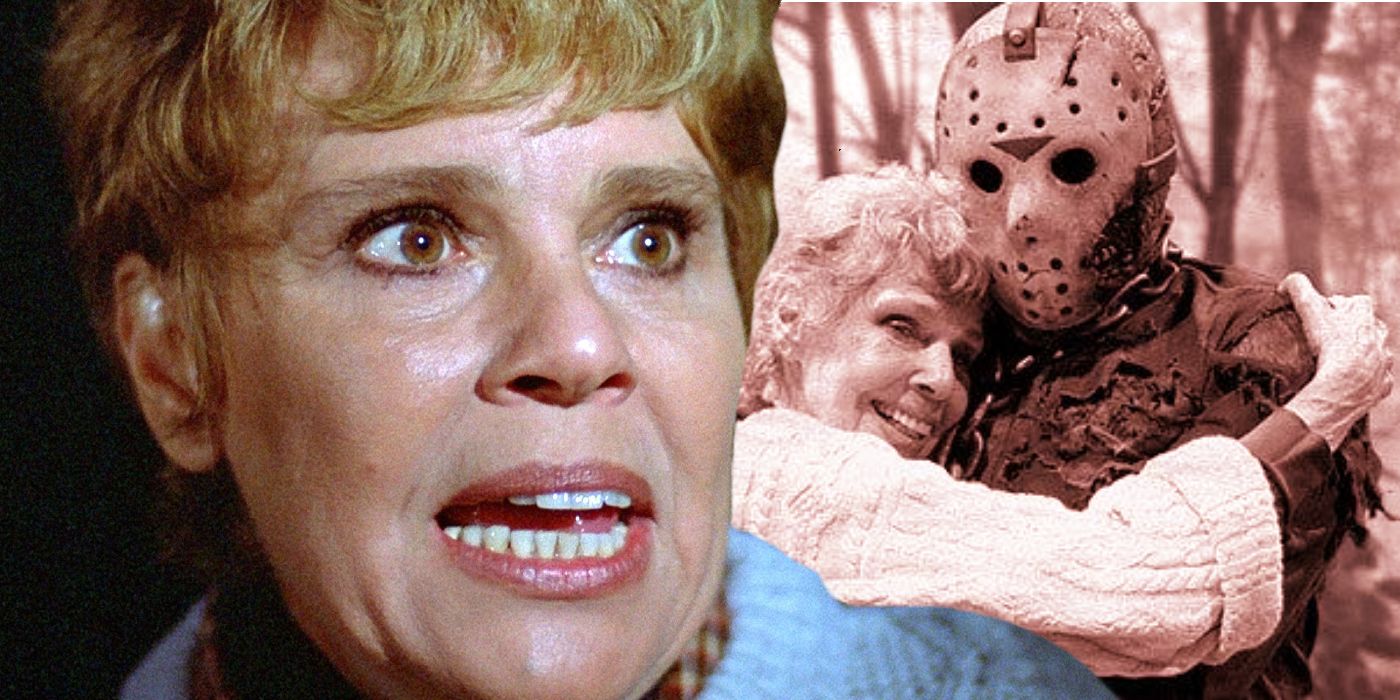
Pamela’s dream was to ensure that the camp would never reopen, through any means necessary. She lost her son due to the neglect of the camp counselors, and none of the new counselors would ever be enough to Pamela, including innocent Annie. Annie finally realized that something was not quite right when Pamela sped past the camp, refusing to stop the jeep to let her out, and decided to jump from the moving vehicle. She frantically ran through unfamiliar woods in vain, and Pamela quickly caught up to her. Annie spent her last moments pleading to Pamela, almost as if she could not believe that an old woman would be capable of such a violent act. Her cries prove to be futile, and Pamela ends Annie’s life by slitting her throat.

Back at Camp Crystal Lake, property owner Steve Christy and the camp counselors were preparing for the grand reopening of the camp. Alice is framed as the new final girl the audience will follow through the film. It is left ambiguous if Alice had been having a sexual relationship with Steve, although he expressed jealousy at the thought of her and another man in a relationship. After Steve left the camp to run to a nearby town to pick up supplies for the impending storm, the counselors immediately began to let loose and party. Pamela watched from afar behind the shaded woods as Ned, the ‘fool’ character, pretends that he is drowning. Unlike Pamela’s son Jason, in this instance the counselors all spang into action, all frantically trying to save him. Ned used this opportunity to kiss Brenda without her consent as she was attempting to give him mouth-to-mouth resuscitation, further reflecting the lingering male gaze.
In a similar narrative, Psycho (1960) also abruptly changes the main character that the audience will follow after the first act of the film. Psycho (1960) begins by introducing the audience to Marion Crane. She is first shown spending an intimate afternoon with her boyfriend, Sam, inside of a hotel room on her lunch break. They both conversed about his debts and other financial troubles, the main oppressive force that kept them from getting married. After returning from her break, Marion encounters a wealthy customer, Mr. Cassidy. After he pulled out forty thousand dollars in cash out of his coat pocket for a down payment, he told Marion that he “never carries around more than he can afford to lose,” (Psycho, 1960). while further mentioning that he kept all his money undeclared. Anxiously and impulsively, Marion decided to run away with the money, hoping to make her dreams come true with Sam.

After nervously trading in her car, Marion drives until she reaches the Bates Motel in a rainstorm. After glancing around the property, she noticed a tall figure of a woman walking by the window of the Bates mansion. She used the horn of her newly purchased car to alert the house of a prospective guest, and Norman Bates appeared to greet her. Norman, normally living in complete isolation, was delighted to have a guest for the motel. After showing Marion to her room, he asked if she would share a meal with him at the mansion. After awkwardly and nervously stating that he did not set the best table, Marion accepted his invitation. After Norman left the motel room, Marion seemingly overheard a conversation about the invitation to dinner between Norman and his mother. The chastising voice carried by Mrs. Bates snarls, “No! I tell you no! I won’t have you bringing strange young girls in for supper! By candlelight, I suppose, in the cheap, erotic fashion, of young men with cheap, erotic minds!” (Psycho, 1960). The voice further berates Norman until he is heard exiting the house. Instead of eating at the house, he redirected the dinner location to the parlor in his office.
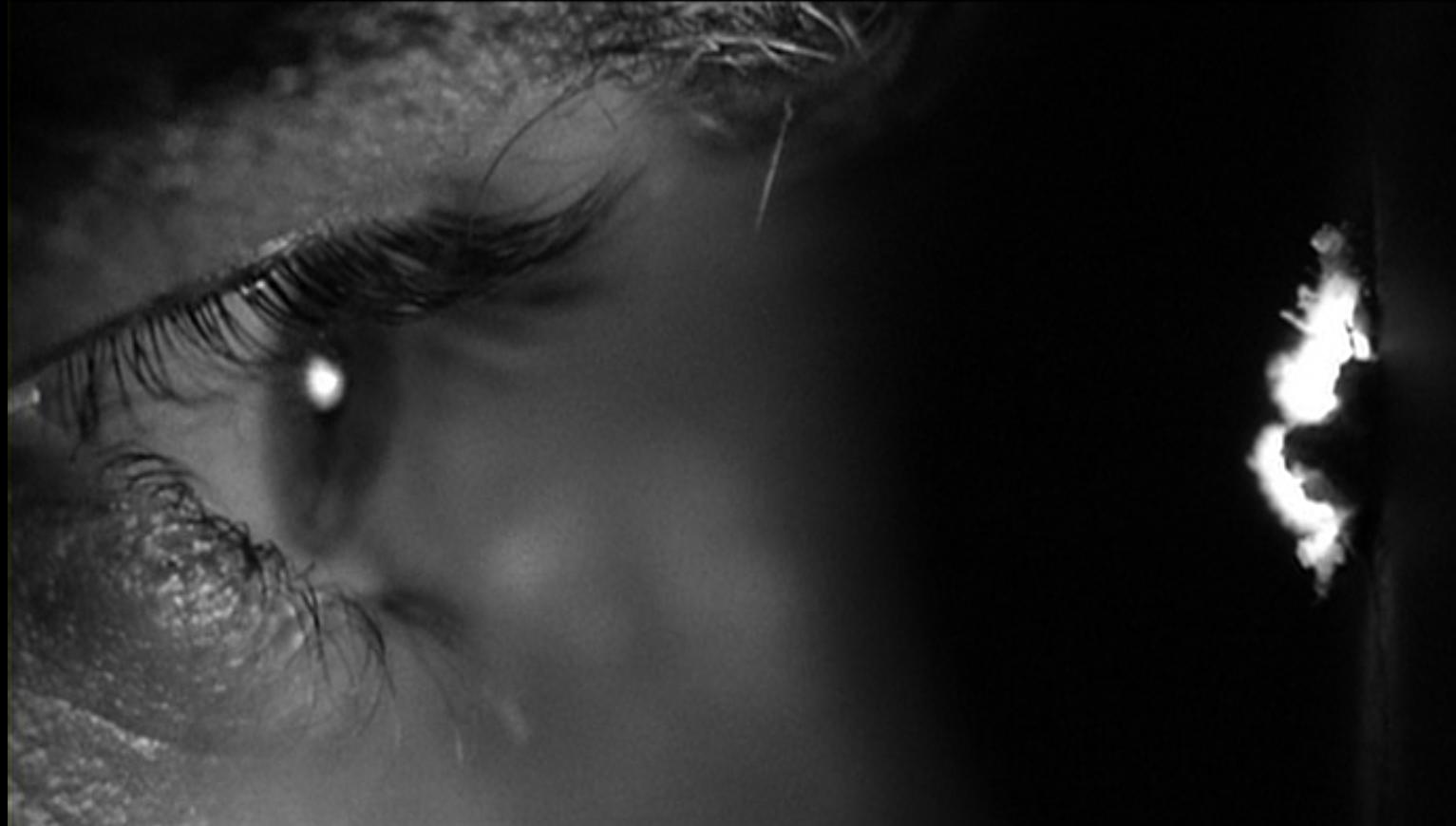
Forty-seven minutes into the runtime of Psycho (1960), Marion Crane is brutally stabbed to death in her shower. This absolutely stunned many moviegoers in 1960, and this scene became one of the most legendary in cinematic horror history. “In those days, moviegoers arrived at the theater whenever they wanted. If the movie was in progress, they would sit down and watch, then stick around for the next showing, to see what they’d missed. Hitchcock wanted to prevent that… he inaugurated the idea that audiences had to attend from the start of the film, which he said at a press conference was a ‘daring presentation policy’.” (Gray, 2017). Prior to her murder, Norman spies on Marion through a hole in the wall, hidden underneath a painting. She is shown undressing into a robe, and this literal depiction of the male gaze results in a massive flood of anxiety and restlessness from Norman.
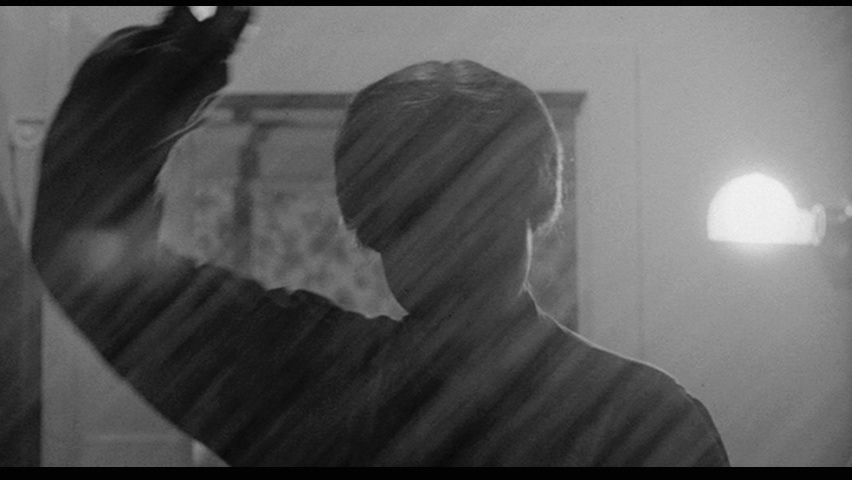
A linking theme explored in both Friday the 13th (1980) and Psycho (1960) are the relationships that each cinematic slasher has with their mother. Norman is revealed to have killed his mother ten years prior to the start of the film, keeping her alive in his own mind, and through preservation of her corpse. Jason, however, is thought to be dead for most of the film. His mother avenges his death through butchering the careless camp counselors that she trusted his life with. In the climax of Friday the 13th (1980), the final girl left for Pamela is Alice. At first Pamela deceives Alice with her misleading presence, just as she did with Annie, stating that she was an old friend of the Christy family. Alice soon fearfully realized that she was in grave danger, and Pamela attacked her.
Similar to Psycho (1960), Jason’s personality is also shown to exist inside of Pamela. He encourages her murderous agenda speaking through her voice, saying “kill her mommy, kill her, she can’t hide, no place to hide.” (Friday the 13th, 1980). The final girl is left to sit on a boat, on the lake that stole Jason’s life, with only an oar to protect her from a machete. After losing grasp of both of their weapons and engaging in a physical battle, Alice scrambles for the machete and frantically beheads Pamela. Exhausted, Alice used the paddleboat to float to the middle of the lake to sleep and wait for rescue. The film concludes with an image of Jason emerging from the lake to attack Alice. “The surprise appearance by Jason showed that the legend was real, and now that his mother is dead, it was his turn to come out and seek revenge against those who did them wrong.” (Tyler, 2021).
The conclusion of Psycho (1960) shattered the double life that Norman Bates lived. He was revealed to not only have stolen his mother’s corpse but was also the one to end her life. The concept of the ‘death-mother’ trope is explored through the Bates family and their tumultuous relationship, “The death-mother is a maternal figure associated with death, offering toxic threat, not conventional nurture, terror, not love.” (Greven, 167). Norman and his mother, Norma Bates, lived a codependent life together in isolation, until Norma found a lover. The intrusion of another man into their lives and routine was more than Norman’s psyche could bear, and he poisoned them both to death. “Life and death fused, a cesspool and a mechanistic monster, a blur of male, female, and technological-industrial signifiers, the image of the death-mother synthesizes the concerns of the film but also exceeds them. This final image, a fleeting glimpse of the death-mother, demands but defies interpretation, as does the film itself.” (Greven, 168). Norman was so protective and loyal to his oppressive ‘death-mother’ that he ultimately transformed into Norma Bates herself.
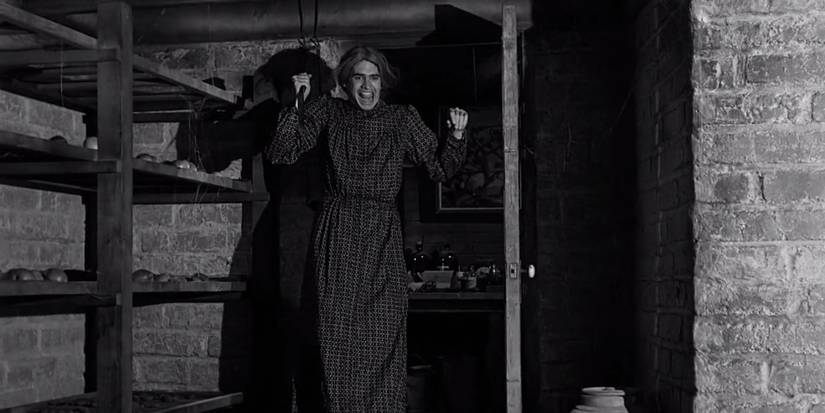
The putrid toxicity from both the Bates and Vorhees family tragically did not end at home. Guided by the oppressive memory of their mothers, both Norman Bates and Jason Vorhees created a blood-soaked wave of violent destruction in each of their communities. Lust is a sin to these slasher sons and must be snuffed out through any means necessary. Despite the countless transgressions of their own matriarchal figures, they each live by the cardinal rule that ‘mother knows best’.

Works Cited
Cunningham, Sean S., director. Friday the 13th. 1980.
Gray, T. (2017, June 9). Secrecy Surrounding 1960’s ‘Psycho’ Went Off Without a Hitch. Variety. Retrieved April 3, 2022, from https://variety.com/2017/film/news/alfred-hitchcock-psycho-secret-1202457671/#-
Greven, D. (2014). The Death-Mother in Psycho: Hitchcock, Femininity, and Queer Desire. In Studies in Gender and Sexuality. (pp. 167–181).
Jemisin, N. K. (2010). In The Hundred Thousand Kingdoms (pp. 61–61).
Kvaran, Kara. (2016) “You’re All Doomed!” A Socioeconomic Analysis of Slasher Films.
Hitchcock, Alfred, director. Psycho. 1960.
Norden, M. F. (2007). The Changing Face of Evil in Film and Television..
Tyler, A. (2021, October 27). Friday the 13th’s lame original ending: What changed & why it didn’t work. ScreenRant. Retrieved April 21, 2022, from https://screenrant.com/friday-13th-original-ending-lame-reason-changes/

Your blog is a true hidden gem on the internet. Your thoughtful analysis and in-depth commentary set you apart from the crowd. Keep up the excellent work!