
I will never forget watching this film trailer for the very first time. Nearly 20 years later it feels more relevant than ever.
You may have heard of the MPAA. They are an industry body that has been associated with the American film industry for nearly all of its existence. The board first formed in 1922, about 34 years after the release of what is believed to be the first motion picture ever captured. William H. Hays, former political campaign manager for Warren G. Harding and chairman of the Republican National Committe, served at the first chairman for the MPAA after resigning from his position. Just 8 years later, the Motion Picture Code was created. It is known today by its more popular name, The Hays Code.
“Under the Code, movies had to be morally upright; any instances of evil and transgression should be punished by the time the credits rolled. In the 1930s, of course, that meant adhering to a way of life amenable to a white, heterosexual, cisgender populace. The Code included a wide range of restrictions on items like nudity, obscenities, ridicule of religion, and ‘lustful kissing.’ Evil characters could never appear sympathetic to the audience, and crime could not pay (or even be explained in great detail). Scenes set in bedrooms were only OK if they did not ‘suggest sex laxity and obscenity’.” (Backstage)
The first film released under these strict new regulations was It Happened One Night (1934).
In section 1.2 of the elderly document, they pose a troubling thought process in regard to the nature and ‘morals’ of artistic expression. “Art enters intimately into the lives of human beings. Art can be morally good, lifting men to higher levels. This has been done thru good music, great painting, authentic fiction, poetry, drama. Art can be morally evil in its effects. This is the case clearly enough with unclean art, indecent books, suggestive drama. The effect on the lives of men and women is obvious.”
The entire document for the Motion Picture Code of 1930 can be found here.
This era of film censorship shifted in late 1960s; with more and more filmmakers continuing to push the limits on what was permissible on screen. In 1966, Jack Valenti, former special assistant to President Lyndon B. Johnson, left the White House and was appointed as the President of the MPAA. Under Valenti, the association made some changes. One of the most notable changes was the ending of the Hays code in favor of a new ratings system.
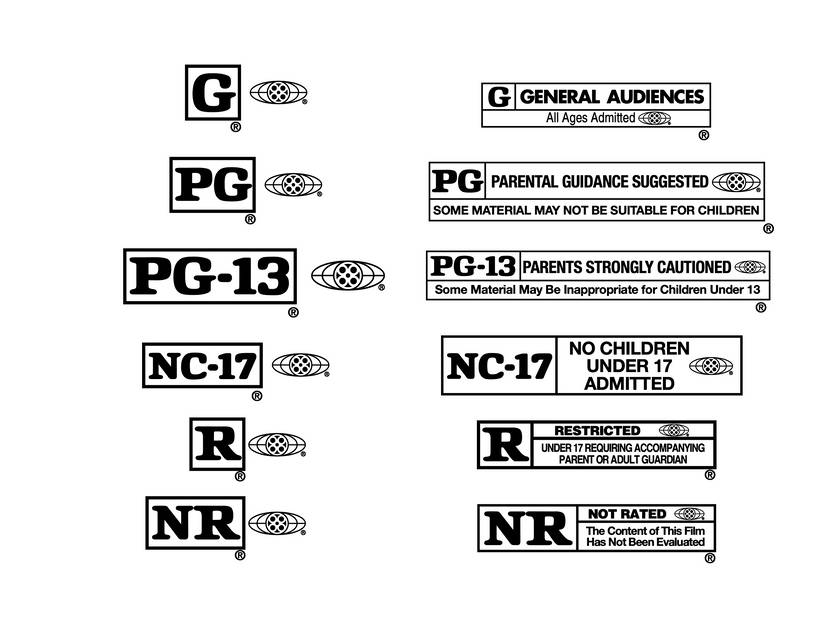
This Film is Not Yet Rated (2006), an investigative documentary directed by Kirby Dick, makes a phenomenal case that the Motion Picture Association of America limits the creative process and idea expression from filmmakers. The side-by-side comparison of similar filmed scenes in cinema indicates that this creative limitation is a form of censorship to certain marginalized groups. This is especially evident in the scene comparisons regarding the sexual content of heterosexual vs homosexual screen representation.
I think it is extremely apparent that the MPAA conservatively demonizes sexual themes and content more than violence. One of the most jarring comparisons is the montage of the violence in horror films towards women. Body parts may be seen, but only as objects or humorous plot devices, as in the case of Scary Movie (2000).
“Classification and Rating Administration board members are bound by strict eligibility rules. Each is required to be a parent and ‘may not have any other affiliation with the entertainment industry.’ Further, once a member’s youngest child reaches twenty-one, they forfeit their post. In order to avoid undue influence from industry professionals among others, says the MPAA, all members are anonymous.” (The Script Lab).
This anonymous board holds an extreme amount of power as to what films make it into the public sphere. Technological advances and online marketing have helped to slightly level the marketing playing field, but smaller filmmakers with a controversial story to tell have an uphill battle to climb in pursuit of their art.
In 2017 Charles Rivkin became the CEO of the MPAA, where he remains to this present day. Subsequently in 2019, the MPAA went through another change, officially dropping the “America” from their title. Earlier this year in 2024, Amazon MGM Studios joined the Motion Picture Association. “The association’s other members are Disney, Netflix, Paramount, Sony, Universal and Warner Bros.” (The New York Times). Filmmaking is a subjective artform, and independent artists seem to have a mountain to climb while staying true to their vision.
I also wanted to add the amazing fun fact that this documentary is not only on YouTube but also uploaded by Private Investigator Becky herself!

Please note that YouTube has marked this important documentary as “age-restricted”. An alternative link can be found on Watch Documentaries.
